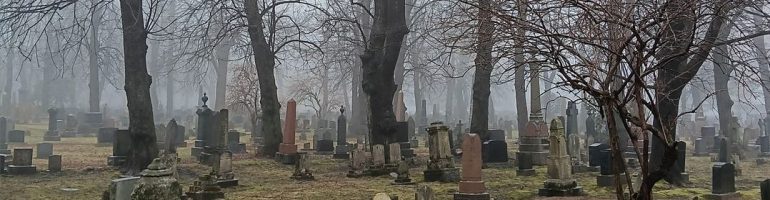
Tag Archives: History

The Haunted Halifax Citadel )O(


Merry meet all,

Here is my first article for the Paranormal Daily News!! 


Haunted Halifax Citadel – Canada’s Spookiest Ghost Tour

halifax citadel
halifax citadel
(Image – Canva)

​Brief history of the Halifax Citadel

Halifax is a charming maritime city in Nova Scotia, Canada, brimming with spooky historical legends. Ghost stories are often laced with tragedy and nowhere is that more true than at the Halifax Citadel, and Halifax itself, where the dead roam amongst the living.

The Halifax Citadel is a national historic site. Four fortifications were constructed on Citadel Hill since the British founded the city in 1749 and are often referred to as Fort George. Only the third fort which was built between 1749 and 1800 was officially named Fort George, after King George III.

While Citadel Hill was never attacked, the Citadel is significant in its defence of the Halifax Harbour and the Royal Navy dockyard.

The British founded Halifax to act as a counterbalance to the French stronghold of Louisburg, which was returned to French control the previous year by the 1748 Treaty of Aix-la-Chapelle. Edward Cornwallis, the appointed governor, arrived on June 21, 1749 to settle Halifax. He traveled to Halifax and was followed by 13 transports that carried about two thousand settlers. Halifax was a strategic city during the next decade in the ongoing Anglo-French rivalry in the region. The British had recruited Protestant settlers from Europe and built fortifications to protect them from raids by the French, colonial Acadians and allies from the Wabanaki Confederacy (Mi’kmaq).

The infamous ‘Father Le Loutre’s War’ (1749-1755) began when Edward Cornwallis, the appointed governor, arrived on June 21, 1749 to settle Halifax. He was followed by 13 transports that carried about two thousand settlers.

The current star shaped Halifax Citadel fort was a massive masonry-construction designed to protect against a land or water-based attack from the United States. Completed in 1858, the star shape structure was purposely designed to give many lines of fire from the defenders. A few portions of the hill were built with tunnels, which could be provided with explosives and detonated from the forts. The British forces enhanced Fort George’s armaments by using heavier and more accurate long-range artillery. By the end of the 19th century, the role of the Halifax Citadel changed to a command center for other harbor defenses and to provide barrack accommodations.

During the Second World War, the role of Halifax Citadel was to provide temporary accommodations, signaling and a coordination point for the city’s aircraft defenses during the war. Today, Parks Canada operates the Citadel as the Halifax Citadel National Historic site of Canada. The fort has been restored to its appearance as it was in the Victorian Era.

For many years, a set of military gallows with a flogging post, stood in the centre of the CitadelHill parade grounds.

In 1935, Citadel Hill was designated a National Historic Landmark but showed signs of decay. Some Halifax downtown businesses suggested demolishing the fort and using the space for parking and development.

​Restoration of the Halifax Citadel

halifax citadel
(Image-Canva)

Thankfully, the historic Halifax Citadel was recognized for its worth. The historical significance and the tourism potential led to its preservation and gradual restoration. In 1956, the site had been partially restored and opened for business as a Halifax army museum. It was home for the Nova Scotia Museum and the Maritime Museum of the Atlantic.

Parks Canada fully restored the famous fort to its full grandeur in the 1990s. It was a common practice for the restoration workers to leave dated coins in the mortar or under replaced stone walls. The coins were a marker of what areas had been worked on and when.

Today, the site is still managed by Parks Canada. The Halifax Citadel is one of the most visited National Historic Sites in Atlantic Canada. The grounds of the Citadel are open to the public year round. From the spring to fall, living history programs feature animators portraying the 78th Highland Regiment, stationed in Halifax from 1869 to 1871, the 78th Highlanders Pipe Band, the Third Brigade of the Royal Artillery, and tradespeople. Halifax Citadel sees up to 200,000 visitors and tourists annually.

​The Halifax Citadel Ghost Tour

One significant attraction the Citadel offers is a year-round daily ceremonial firing of the noon gun, a reminder of the fort’s role in the city’s defenses. The best attraction for me and many other people are the ghost tours offered by the staff at Halifax Citadel.

A costumed guide leads you through a 70-minute walk, weaving stories intended to keep you awake all night. Be prepared to be spooked. You meet the guide on the drawbridge at the main gate and are led by candlelight (spooky setting!) through tunnels and prison sites, and hear true tales of many unexplained events in their real locations.

Popular ghost stories

There are about forty documented sightings of ghosts at the Halifax Citadel. Here are some of the popular ghost stories associated with the Ghost Tour.

The Grey Lady: A spirit said to forever wander the grounds, mourning her lost love and bearing the scent of roses. She wanders the floors of the Cavalier building, wearing a 19th-century dress and is still seen to this day. A guard was stationed overlooking the second floor balcony, and saw a woman pass on the veranda beneath him and disappear around the corner. She is believed to be Miss Cassie Alan, and was engaged to a soldier stationed at the Citadel. But on her wedding day, when she waited at the altar on November 14, 1900, he never arrived.

The carriage driver arrived to pick up the groom only to discover that he had shot himself. He believed that was the only way to conceal his past. The driver went to the church to break the sad news to the bride. She became hysterical and found the truth too hard to accept. Her spirit still searches the grounds for him. Officer Edward, the groom who committed suicide, is said to haunt the area near his barracks.

The most vivid occurrence of the Grey Lady being spotted was when an employee had to sit in a certain chair to greet guests. When she arrived, he saw her and thought she was of the living. He rose from the chair to greet her but then she was gone. She was spotted a few more times always wearing the same dress and disappeared before he had the chance to talk to her.

Ghost lighting a pipe: Brunswick Street is across from Citadel Hill and boasts its own ghost story. According to a newspaper titled The Acadian Recorder dated December 16, 1867, a ghost who was an imposing height of about twelve to sixteen feet was spotted walking from Citadel Hill to Brunswick Street. He wore a British Army uniform and paused to lean over a lamp post to light his pipe. A local Halifax police officer chased the giant apparition who vanished into a Brunswick street window.

The Murdered Soldier: A murdered soldier tragically fell down a well, his remains discovered centuries later. In 1782, two young officers were patrolling the grounds when they came upon an unsavory character. The tall figure wore Tom hunting clothes and he was tall and gaunt. One of the officers recognized him as his brother. A while later, his worst fears were confirmed when a letter arrived – his brother had died in a hunting accident the exact same time he saw the spirit.

The Lady of the Ditch: A woman was found dead at the bottom of the ditch. Her remains were never identified. At 4am in the morning, a sentry observed that something had fallen into the ditch and was not moving. Upon closer observation, he realized it was a woman in a tattered grey dress who had fallen tragically to her death from the top of the wall with a slash across her throat. Now she haunts the Citadel and visitors have reported spotting her in the Cavalier Building

The Tale of the Missing One-armed Sergeant: There is a well on the northern side of the inner Citadel, behind a closed locked door in Casemate 18. The unfortunate sergeant went by the name of O’Reilly and his job was to guard the regimental flags in battle. That was a hard job. He was responsible for a young private named Billy and often gave him a hard time, believing it would teach him responsibility. That turned out to not be the case. A fire erupted at three in the morning at the North Barracks. The barracks were constructed from resinous pine lumber. No one noticed when the sergeant vanished but the fire consumed the entire building.

The next morning when the roll call was taken, Billy and O’Reilly were gone. In the winter of 1851, a soldier drew water from the well at Casement 18. To the soldier’s horror, a severed arm was found in the bucket from the well. The body of sergeant O’ Reilly was finally recovered. The water was putrefied. The rest of his body was brought up. He had been shot in the back by Billy, who deserted. To this day, his ghost is seen in the well standing at attention sometimes carrying his missing arm.

citadel guide d72141977eeae515ad5861f5fe61c089 800 Paranormal Daily News
Halifax Citadel Tour Guide – Commons Wikimedia

Visitors and staff have noticed orbs of light passing through walls and doors, shadowy figures that vanish when approached and cold spots that set off motion detectors. The prison cells of the fort are very spooky. People have heard chains dragging across stone floors and whispers in the dark! The grim history of the Halifax Citadel is full of loss and bloodshed, never to be forgotten, where the dead refuse to remain ‘quiet’. It is no wonder the Citadel is so haunted.

The horrors of the First and Second World Wars are over but their tragedies and the battles live on at the Halifax Citadel. The ghost stories will live on in our imaginations and in our hearts. Future articles will delve into ghost stories from other areas of Halifax.

References:

https://halifaxcitadel.ca/services/the-halifax-citadel-ghost-tour.html

https://www.dustykeleher.com/the-halifax-ghost-walk

https://en.wikipedia.org/wiki/Citadel_Hill_(Fort_George)

https://dalgazette.com/arts-culture/27613/

Halifax Haunts: Exploring the City’s spookiest places. Nimbus Publishing, 2009. Nova Scotia, Canada.

Blessings, Spiderwitch 

Leave a comment

Filed under Paranormal and Witchy Fiction

Interview with horror author Zack Ellenberger


Merry meet all,


Welcome everyone. Today, we are joined by Zack Ellenberger. So settle in with a dark rich cup of java and let’s clear a space amongst these spiderwebs. 


Why horror? Do you have a favorite subgenre in horror?

If I’m honest, I don’t really know. There’s something very visceral about the emotion of fear that differentiates it from other emotions. I guess part of it is a lack of discomfort in my own skin and trying to portray/share those discomforts through fictional narratives. I also think we too often tend to stay inside our comfort zones nowadays and if there’s any impact that I’d hope for my stories to have on others, it’d be to encourage them to step outside their comfort zones more often. Plus, I had an older sibling growing up that tormented me with watching old slasher movies as kids. 😊 I’d say my *current* favorite subgenre would be historical horror. I love seeing horror throughout and how fear was manifested at different points in time. Cosmic horror would a close second. Fear of the unknown is what gets under my skin!

Which other horror authors influenced you the most and why?

I’m really into the early Romanticism/Gothic fiction period, of course writers like Poe, Robert Louis Stevenson who did Dr. Jekyl & Mr. Hyde, and even Ambrose Bierce. But also, Lovecraft and his cosmic horror were big influences as well. I think what caught my attention most in those types of stories was the isolation – inward reflection of the storytelling and a single narrative throughout. There’s something very dark and terrifying about the 19th century that lends a particular spookiness to storytelling.

Tell me about your writing/ editing process

Although I try to retain some structure to my writing and editing process, it is sometimes spontaneous. I keep a list of ideas I’ve accumulated, anything from story plots to character backstories, etc., choosing whichever idea grabs my attention. Then, I like to outline while I marinate on the idea, develop a few different story plots and choose from what I like best. Editing is always the toughest. You can edit your own work as many times as you’d like, but you’ll never get it to where it needs to be without getting another pair of eyes on it. I’ve learned that the hard way.

What inspires you to write horror?

I’m a big fan of history. If I’m not writing horror, I’m writing history… OR reading it. I always felt that history had the best stories to tell and there was never a shortage of inspiration found within history for any genre. There are so many stories in history that portray real horror outside the realm of fiction. The intent is not to glorify such events within history, but as a reminder that history is doomed to repeat itself in the most horrifying ways if we don’t keep up with our history.

What do you love about indie publishing?

What I’ve found most rewarding and have come to love about indie publishing of having full ownership of everything you do. The idea of being responsible for every aspect of your story – from editing/revising, to marketing, to publishing – can seem a bit daunting at times. But that amount of control is something you won’t ever come across elsewhere. If you’re willing to put in the effort of being part of every aspect of your book coming to life, then why not self-publish. I say that knowing full well that it is not an easy task.

Which is your favorite horror movie or book? Which movie or book impressed and inspired you the most?

I watch a lot of movies…. after much consideration, I’m going to have to give it to Apostle. It’s a period piece on Netflix with a touch of everything, starring Dan Stevens, Michael Sheen, and Lucy Boynton. Fantastic performances all around, would strongly recommend! Book-wise, I always had a soft spot for Ambrose Bierce’s “An Occurrence at Owl Creek Bridge” short story. It seemed very ahead of its time in terms of narrative twists.

Is there any music that helps you to write?

I actually don’t listen to music while writing. I used to listen to instrumental music, but I wanted to try my writing from a place that was completely void of influence. Until I know what kind of emotion I wish to put forth, I avoid music. But if I do, it’s mostly instrumental.

Do you have any special projects you want readers to know about?

My story with Unveiling Nightmares, “Past Lives,” is going to be released in February of next year. I also have an audio story coming out soon on Audible based on my short “Blood Vengeance” which was released with Savage Realms Magazine back in 2022. I’ve recently started a podcast with some of our fellow writers at UN called “Dread-Libs” where we trying to ad-lib a horror story within in an hour based on submitted suggestions from listeners. You can find it on YouTube and you can find all my other information on my website http://www.zachellenberger.weebly.com.

Where can readers find you on social media?

You can find me on Tiktok/Twitter at @zak4prez911. I’m on Instagram at @words_of_the_bergermeister and search me on Facebook as Zach Ellenberger.


Thank you Zack Ellenberger for sharing this with us today. I look forward to learning more about your successes in the future. 


Blessings, Spiderwitch

https://unveiling-nightmares.com/

Leave a comment

Filed under Paranormal and Witchy Fiction

The Dos and Don’ts of Haunted Objects

Merry meet all,

I am so honoured to discover that my blog is included on the website 100 Best Paranormal Blogs and Websites! Wow! I am honoured. I mean this is awesome. Truly awesome. 

Today the sun’s shining hard but the cold wind lingers. That ruins my groove because I can’t wear certain tops, unless I have the equivalent of an eskimo parka on over it. Not sure why this cold wind is still here but I hope it leaves soon.

Today’s post is about how to deal with a haunted object. Enjoy!

The Dos and Don’ts of Dealing with a Haunted Object

Many people believe that objects can become Haunted. Whether you believe it or not, there are certain steps you should take if you think you have a Haunted object in your possession. In this blog post, we will go over what to do if you think an object is Haunted as well as how to remove a spirit from an object.

How Can a Spirit Become Attached to an Object?
There are two main ways that a spirit can become attached to an object: through attraction or through energy. The first instance is when the spirit is attracted to the object itself. This could be because of the material it is made out of, its color, or even its shape. The second instance is when the spirit becomes attached to the energy of the person who owns the object. This often happens with items that have been passed down through generations or have been owned by someone for a long time. The attachment can also happen if the owner was very emotional when they were using the item.

For example, if a person got very angry while using a particular tool, that tool could pick up on that anger and attract a spirit that is also angry. Or, if someone passed away while wearing a certain piece of jewelry, that jewelry could hold on to the energy of the person and their passing. There are many different circumstances in which a spirit can become attached to an object.

Can Objects Be Haunted?
The answer to this question is a little bit complicated. Technically speaking, no, an inanimate object cannot be haunted because it does not have a soul. However, what many people think of as “haunted” objects are actually just objects that have had a spirit attached to them at some point in time. So while an object cannot be haunted in and of itself, it can have all of the same symptoms as a haunted house would—things moving on their own, strange noises, etc.—because there is a spirit present.

Dos:

• If you think an object is Haunted, the first thing you should do is try to figure out why the spirit is attached to the object. This can be done by researching the history of the object or talking to a medium.

• Once you know why the spirit is attached to the object, you can try to help them move on. This can be done by holding a seance or by performing a cleansing ritual. • If you are successful in helping the spirit move on, be sure to bless the object so that it does not become Haunted again.

Don’ts:

• Do not attempt to remove a spirit from an object without knowing why they are attached to it. This can agitate the spirit and make them angry.

• Do not try to communicate with the spirit without the help of a professional medium. This can be dangerous as spirits can lash out if they feel threatened.

• Do not attempt to perform a cleansing ritual without first doing your research. Cleansing rituals can be dangerous if not performed correctly.

If you think you have a Haunted object in your possession, there are certain steps you should take. Do your research and try to figure out why the spirit is attached to the object. Once you know why they are attached, you can try to help them move on. If you are successful, be sure to blessed the object so that it does not become Haunted again. If you have any further questions or concerns, please consult with a professional medium.

Credit given to: https://paranormalacademy.co.uk/the-dos-and-donts-of-dealing-with-a-haunted-object/

2 Comments

Filed under Ghosts, ritual

Helen Creighton – Canada’s Lady of Folklore

Merry meet all,

As I type here, the rain’s pouring. The sky is heavy and overcast. I haven’t been out to my garden yet. It’s mid-August but the bugs are still harassing me, the weather is still warm but stores are stocking Halloween goods early. I am not ready for the spookiest time of year. That has to do with the goods in my garden growing late in the year due to the heatwave.

Here is a fascinating story about a true paranormal investigator. Read on and enjoy!

Canada’s Lady of Folklore

Helen Creighton

 Helen Creighton was a celebrated folklorist, author, and pioneer researcher. She is  best known for her book Bluenose Ghosts about firsthand accounts of spine-chilling tales. Creighton excelled at collecting local folk ballads, folk tales and ghost stories. She is also known for her skill at collecting local dances, games, cures and proverbs.
            She was born with a caul. A person born with a caul will have a warning before danger. This proved true when Creighton explored the province in search of folk tales. One night she stayed at an inn the night before the Miramichi Folk Festival and had a dream of a child coming towards her. The next day a deer jumped in front of her car on the highway. She would have several of these portentous experiences including her own doppelganger warning her of danger. It made her the perfect person to lend an empathetic ear to those sharing their own experiences.

Because Creighton encountered their stories with a sense of empathy, people trusted her and felt comfortable opening up to her about  their tales, customs and ghost stories. An elderly man once told her, “You’ve got a way with you; you’d bewitch the devil.”

The blurb for Bluenose Ghosts reads: “Haunted houses, headless ghosts, phantom ships, supernatural warnings of death – these are just some of the unexplainable and mysterious phenomena that appear in Bluenose Ghosts. Written in a personable and accessible style by celebrated folklorist Helen Creighton, Bluenose Ghosts is based on the experiences of ordinary people as told to the author over a period of thirty years. These chilling stories come from across the Maritimes – the Highlands of Cape Breton, the woods of New Brunswick, and the harbours around Halifax. First published in 1957, Bluenose Ghosts is a classic of Nova Scotia folklore presented here in a new format and with a foreword from Clary Croft.”

Her career as a folk tales and songs collector spanned forty years. Her celebrated book Bluenose Ghosts focuses on true ghost stories, superstition, witchcraft and buried treasure. She recorded first-hand accounts from the people she interviewed and did her utmost best to maintain their authenticity. She was a collector of tales, not an analyzer, and she received an unfair amount of criticism for that. Creighton collected the folk tales with no intention of analyzing them. That made her stand out from her colleagues and is what was so unique about her.

She took painstaking care to record the folk songs that she collected. She had limited means to work with as she transcribed her work. Over time, Creighton met people who would assist her in accurately transcribing and preserving her work.

It happened by chance that Creighton began collecting local ghost stories. She originally set out to gather folk tales and songs. Bluenose Ghosts is chilling because the scary accounts are from real, everyday people. That is what gives her book so much appeal. The scary experiences are shared by people who have no reason to lie and know how to tell a tale. I dare you to read it at night with the lights on.

Creighton was often found carrying a meter long melodeon in a wheelbarrow when she visited people. She used a tape recorder when it was invented ten years later.  Creighton worked tirelessly to collect four thousand folk songs and tales of eerie spectral encounters. It demonstrates her immense respect for what ordinary men and women had to say. She was determined to preserve their tales to keep them from disappearing in the mists of history.

Creighton may have recorded thousands of folk tales, ghost stories and songs. Yet it was the voices of those she interviewed that shone in the books and tapes. She never got in their way or tampered with their words. She was given the nickname the Ghost Lady by those she interviewed.

Here is an unsettling excerpt from the book: “An East Chester woman said, “My uncle was a contractor, and when I was fifteen, he and I were going home to Mahone Bay from Western Shore. When we were in the woods I heard a horse and it seemed to be so close that I could almost feel its breath. I looked around and what I saw was a horse all right, but there was a man sitting on it with no head. My uncle didn’t see it, and I was too scared to speak until we got home and then all he said was, ‘That’s nothing. Lots of people have seen that horse and rider.’ Since then I have asked many people but nobody seems to know who the rider is supposed to be.”

A headless ghost and his horse, top that. That is one of many chilling tales from regular people simply sharing their stories. This is why I love the book and why it spooks me.

Here’s a second excerpt about a sea captain, the devil and a set of playing cards:

“They were his own cards anyway, so he put them in his sea chest and locked them up. “That night he was awakened from his sleep and was surprised to see a man sitting on his sea chest. He was dealing cards, and he dealt four hands. Then the stranger saw that the captain was awake and asked him to sit in and have a game with him. Before he could make up his mind he looked at the man’s feet and saw the cloven hoof. He screamed and the stranger disappeared, and that was why he would have nothing more to do with playing cards.””

The excerpts above demonstrate how spine tingling the book is. No other book compares to Bluenose Ghosts. I highly recommend the book to anyone who craves a salty maritime ghost story.

Creighton left Canadians with a trove of rich folklore. She ‘still hasn’t been matched”. Her style and approach were considered unconventional. “Horace Beck wrote (that), “Perhaps your most important achievement is that you have done something no one else has been able to do in North America. You have brought folklore to national and public attention and given it a status in Canada it has never achieved in the United States. This you have done most singlehandedly and for this all folklorists must be forever grateful.””

Helen Creighton left a legacy to those who are passionate about ghost stories and the paranormal. She was a true pioneer. When Helen Creighton began her career, she was untrained and inexperienced but that didn’t stop her.

“Over the course of her career, Creighton collected over 60,000 materials including 4,000 songs and ballads. She authored thirteen books of traditional songs, ballads and stories, of which her Bluenose Ghosts is the most widely known. She also wrote an autobiography, and a number of articles. She received many awards, including Distinguished Folklorist of 1981 (Canada); six honorary doctorates; Fellow of the American Folklore Society, Honorary Life President of the Canadian Authors’ Association; and The Order of Canada. Helen was awarded Lifetime Achievement Award in 2017 by Folk Alliance International. In 2018, Parks Canada designated Helen Creighton a nationally significant person who helped define Canada’s history.” The collection of her life’s work now resides at the Nova Scotia Public Archives.


Blessings, Lady Spiderwitch

Leave a comment

Filed under Paranormal and Witchy Fiction

Imbolc

Merry meet all,

Production or should I say, construction of my dreamy winter coat has been postponed. The lining material has strangely vanished. I can’t explain it. Besides, I want a new colour for the lining material. The red I chose is in my opinion, the wrong colour. Since I have to live with the shade of brown for the rest of my life, I am purchasing a tan or camel colour at the end of the month. The ling material that I have now is too red, more like a wine or a burgundy color. I can’t wait to get back to work on it. 

Imbolc is here! Imbolc is the first of the three spring Sabbats. It doesn’t look like spring today. The sky is dark and overcast, and rain batters the houses and streets. Spring is a while yet in coming. mbolc is a pagan holiday celebrated from February 1 through sundown February 2. Based on a Celtic tradition, Imbolc was meant to mark the halfway point between winter solstice and the spring equinox in Neolithic Ireland and Scotland. 

All about Imbolc

Image from Wikipedia

Image from Wikipedia

Imbolc, or Imbolg, is one of the lesser-known festivals of the ancient Celts, but it was one of the four most important festivals in the Celtic calendar. For this ancient society, the year revolved around two main points; on the one hand, since the Celts were an agricultural society, everything was based around the harvest.

On the other hand, they also had an in-depth knowledge about the alignment of the sun and stars, which history suggests had great significance for them. So their calendar was neatly divided up into four quarters, with a festival to celebrate reaching each one. The year started with Samhain at the end of October, when the harvest was in full swing, to prepare for the onset of winter.

In Celtic philosophy, light must always follow dark, so this is why their year began on such a somber note. Bealtaine at the beginning of May marked the coming of summer, the beginning of sowing crops, and the light half of the year, and was the biggest and happiest celebration. In between were Lughnasa in August, marking the beginning of the harvest, and Imbolc in February, to celebrate the beginning of spring.

What was Imbolc about?

Simply put, Imbolc was a celebration of the end of winter and the impending light half of the year.

The hardest part of the year was over; adverse weather, cold temperatures, food rationing, and of course, no warfare (an integral part of Celtic society) would soon be a thing of the past.

Farmers were getting ready to go back to work, preparing animals for breeding, warriors were picking up their weapons again, and the political and social aspects of life that had been put on hold for winter were also beginning again.

The name Imbolc originates from ‘i mbolg’, which translates as ‘in the belly’. This refers to livestock breeding season, particularly the pregnancy of ewes, which was one of the focal points of the celebration.

Because the festival was so associated with this, it’s timing often varied – it could be anywhere from mid-January to mid- February depending on the weather and the animals’ behaviour.

It also appeared to have a more spiritual significance for the Celts too, as it’s no coincidence that more than a few megalithic monuments around Ireland are perfectly aligned with the rising sun around the dates of Imbolc and Samhain.

Imbolc was celebrated all across Ireland, Scotland, and the Isle of Man, with each region having slightly different variations in name and customs. Wales also had a remarkably similar version of the festival known as Gwyl Fair y Canhwyllau.

After the onset of Christianity in Ireland, the festival was tied in with a celebration of Saint Bridget, and transformed from a pagan one into a Christian one.

Christians used Brigid as the focal point of their celebrations to smooth the transition, as Imbolc had previously been associated with a goddess of a very similar name, Brighid. Essentially, Bridget and Brighid were the same person! As with all Celtic festivals, Imbolc involved a host of unique customs and rituals to welcome the spring, say farewell to the winter, ward against evil and promote health and wellbeing.

St Brigid's Cross Necklace

FROM OUR ONLINE COLLECTION – Sterling Silver St Brigid’s Cross 

What happened during Imbolc?

Imbolc was similar to Samhain and Bealtaine in that fire played an integral part of the celebrations, although not on the same scale. While at Samhain bonfires were lit to ward off evil spirits and at Bealtaine they served to offer protection and growth, at Imbolc they were symbolic of the sun’s return.

Rather than a huge central bonfire at the centre of the festivities, Imbolc was more about the home and each home’s hearth. Every home in the community would have their own fire burning right through the night, and during medieval times when homes consisted of actual wood and stone buildings rather than the wattle and daub huts of the Celts, all of the fires in the house were lit for the night. If for some reason that was not possible, it was sufficient to have candles lit in every room instead.

The Celts were always concerned about the weather (something that has lasted up until the present day with modern Irish people!), so Imbolc was an important time to read omens and attempt to predict the weather for the summer. An unusual but widely popular omen was if the weather was especially bad on the day of Imbolc, which meant a great summer was on the way. This is because one of the more malicious creatures in Irish folklore, the Cailleach, would spend the day of Imbolc collecting firewood for herself if winter was to last a while longer.

To do this, she would obviously need a bright and dry day to collect her wood, so if Imbolc was wet and windy, that meant the Cailleach had gone to sleep and winter would soon be over.

Visiting wells was another important custom for Imbolc, particularly holy wells. Visitors would walk around the well in the same direction as the sun traversed the sky at that point on the land, praying for health and wealth for the year.

Offerings were left at the well once this was done; usually coins or ‘clooties’ (pieces of cloth). Special foods were also part of the festivities, usually consisting of bannock – a flatbread cut into wedges – as well as dairy products and meat.

If you are interested in Celtic beliefs, you may also be interested in reading Anam Cara – What’s Soulmate?

Saint Bridget and Imbolc

The early Celtic version of Imbolc was not all that different from the festival in early medieval times when Christianity was taking hold in Ireland. One of the goddesses the Celts worshipped at this festival was Bhrigid, the daughter of Dagda (the chief Celtic deity) and one of the Tuatha De Dannan, the first inhabitants of Ireland.

She is associated with many things, most significantly poetry and fertility, but such activities as healing, smithing, arts, and crafts, tending to livestock and serpents also make the cut. She is credited with creating a whistle for people to call to one another through the night.

Some legends claim that while one half of her face was beautiful, the other was horribly ugly. She is thought by many to be the Celtic equivalent of the Roman goddess Minerva and the Greek goddess Athena.

Saint Bridget, on the other hand, was not a mythical goddess but a real woman, born in Dundalk, County Louth, around the 5th century AD.

During her lifetime she became a nun, founded numerous monasteries and performed her fair share of miracles, becoming one of the foremost advocates of Christianity in Ireland. After her death, she was made one of Ireland’s patron saints (and the only female patron saint), along with Patrick and Columba. So it was a natural progression for Imbolc, the pagan festival worshipping the goddess Bhrigid, to become the Christian festival in honour of Saint Bridget. February 2nd was chosen as the permanent day of celebration.

For the Celts, Bhrigid represented the all-important light half of the year, so her presence was much revered during the festival.

On Imbolc Eve, it was claimed that she would visit the most virtuous homes and bless everyone who slept in them, so people would leave pieces of clothing, food, or other tokens outside the entrance for her to bless, or to entice her into the home, It was Bhrigid’s role as a fertility goddess that was most important here, but for the medieval people of Ireland, her healing powers and general protective sense were as important as well as her fertility.

The majority of Imbolc traditions regarding Bhrigid or Bridget come from this time. While the tradition of leaving small tributes to Bridget on the doorstep continued for several centuries, several others sprang up too.

Celtic Inspired Torc Pendant – Celts believed the ancient Torc provided the wearer with a mystical form of protection

Ashes from the fire that was left to burn all night long would be smoothed out and left to see if a mark from Bridget appeared, to confirm that she had visited the house. Sometimes a makeshift bed would even be made up next to the fire, in case the saint wanted to rest a while.

This tradition was particularly popular in the Isle of Man and Scotland, where there were several short rhymes to go along with the tradition, acting as a call to the Saint to come and visit – generally, they were some variation on the phrase ‘Bridget, come in to our home, your bed is ready’. In some areas across Ireland and Scotland, women played a very important part in the festivities. They would make a doll figure from rushes known as a ‘Brideog’, dress it in white and with flowers, and carry it in a procession while singing hymns and poems in honour of Bridget.

At every home they passed, they would receive more pieces of cloth or small bits of food for the Brideog. Once the procession was finished, they would place the Brideog in a seat of honour and have a feast with all of the food, before placing it in a bed for the night while they began celebrations.

The most well-known tradition, however, and one that is still practiced today, is making a Saint Bridget’s cross and hanging it in the home. These crosses were a unique symbol of the transition from Paganism to Christianity. Before, bunches of rushes were tied together and hung at the entrance to homes to welcome Bhrigid. One of the stories of Bridget’s lifetime, however, recounts how she wove a cross from rushes and placed it above a dying man’s bed.

He roused from his delirium to ask what she was doing, and on hearing what it meant, he asked to be baptised before his death.

Since then, the cross has been a symbol for Bridget, and was also a familiar symbol for the Celts, making it the perfect transition symbol for Imbolc. The cross is distinctive, with a square in the middle and each point of the cross placed at a corner of the square. Somewhere between then and now, placing a cross in your kitchen came to mean that your house would be protected from fire.

Imbolc today

Unlike Samhain, which transformed into the much loved night of Halloween, Imbolc is one Celtic festival that hasn’t quite survived through history.

Although Christians still celebrate St. Bridget’s Day in Ireland and children still learn how to make crosses at the start of February, little else remains of the ancient Celtic spring festival. However, Saint Bridget’s cross, made from rushes and hung around the home just as the Celts would have done, is as good a reminder as any to the festival’s ancient and mythological origins.

Credit given to: https://www.claddaghdesign.com/special-days/all-about-imbolc/

Leave a comment

Filed under Paranormal and Witchy Fiction

The Feminine Macabre

Merry meet all,

I am very excited to announce I’ll be featured in the all-female paranormal journal The Feminine Macabre Volume 2. It will be released in August 2021.

Volume 2 of The Feminine Macabre is out in a couple of months and look at the amazing list of writers who have contributed to this volume and if you’ve not heard of this before, search online for Volume 1 or if you’re UK based click here: amazon.co.uk/Feminine-Macab

The Feminine Macabre is an all-female paranormal journal. Paranormal investigating is not the exclusive domain of men. Damn right. Woman are way more in touch with their intuition. Ghosts are not exactly tangible. It does require having a sharp sixth sense to detect ghosts anyway. That is not what most men do. I am not trying to be sexist here. Paranormal investigations are very scientific too. It is just fascinating. 

I am proud to be included in this journal. It is the first all-female paranormal journal I have heard of. Volume 1 contains a foreword written by Patti Neghri, of Ghost Adventures. I don’t know who is writing the foreword for Volume 2. I am sure both journals will contain fascinating stories. I can’t wait to read both journals. My article focuses on the unsettling true history of my beloved haunted hometown of Halifax, Nova Scotia. 

I will help promote the second issue of The Feminine Macabre. Amanda, the editor and genius of this project is hosting interviews on Facebook. I can’t wait to be a part of that! This all sounds so exciting. I don’t get paid for this but I do get a free copy. I am so happy to be involved that I don’t mind that I am not paid. The payoff is this opportunity. I am very grateful. 

I just happened upon the website Spookeats. It is how I got involved in this. Good thing too! Hm, now that the lockdown is over, I may dive back into my solo paranormal investigating. 

Till then, stay spooky

Blessings, Spiderwitch


Leave a comment

Filed under Paranormal and Witchy Fiction

Spirit Boxes

Merry meet all,

I just received my new Spirit Box in the mail. I am so excited! I watched a tutorial on Youtube about how to operate it. I already own an EMF detector. I am eager to begin detecting spirits in my home or in haunted areas of Halifax. We have the Civil war here, the Titanic victims and the victims of the Halifax Explosion here. You can all then understand my enthusiasm. 

A Spirit box is a paranormal research device. It uses a radio with a frequency scan code meant to rapidly sweep the frequency  channels of radio stations creating a white noise effect. This allows spirits to affect the white noise and communicate through it. Clear sounds can be caught while the device scans a multitude of radio stations. The faster the sweep, the clearer the sounds are. 

If you hear a robotic voice answer your questions, congrats, that is the spirit talking. Here are some questions to ask that are effective in getting responses:

  • Are you here?
  • Is there anyone here?
  • Where are you?
  • How old/young are you?
  • What do you want?
  • Show yourself
  • Give us a sign
  • Talk to me/us
  • Open a door
  • Turn on/off the light

I plan to attempt communicating with spirits using my Spirit box and my K-II EMF meter. This shall be fun. I will also jot my sessions in my Book of Shadows. Just like when using a pendulum, keep the questions easy to answer. It shows a respect for the spirits. It is unwise to ever disrespect the spirits. If you don’t believe me, then ask Zac Bagans why he wears prism glasses now and for the rest of his life. 

On a side-note  I worry about Zac. He can’t die. He has to not die. I say this because the spirits that he provoked or angered now will recognize him when he finally crosses over. I hope they don’t do terrible things to him. I will never know of course, but I still worry. 

I bought my Spirit box from Amazon.com. I live in Atlantic Canada but it was shipped to me so fast. Wow. Spirit boxes are available on Amazon and other sites if you are interested in attempting your own spirit communication. I highly encourage you to do so. Paranormal devices are so widely available now. Move over, Ghostbusters. The devices are now found in many homes in North America. We can all do research on our own these days.  

I shall have fun investigating my own very haunted hometown. The window that steadfastly remains haunted no matter how many times it is replaced, the haunted 5 Fishermen restaurant, the Halifax Explosion, the harbour front. Oh I can’t wait to get started. 

And that’s a good thing! It’s paranormal groups like Ghost Adventures that has made this possible for people who seek their own spooky fun in investigations. I have covered some of those groups on this blog. The future looks bright – and spooky for those with a passion for the paranormal – like me! My cat is my assistant. She’s napping on her cat bed right now. She is so darn cute!

Use caution and common sense. You cannot assume that every sound that comes out of a Spirit box though is a ghost. Learn when you get a false positive and what can be debunked. If you hear footsteps and your team member is just walking up behind you, or there’s a draft that causes a door to open, it could just have a rational explanation. Be skeptical until you rule out all causes. Then you have to accept the unexplainable. 

Remember: Never summon what you can’t banish!

Blessings, Spiderwitch


Leave a comment

Filed under Paranormal and Witchy Fiction

Overtoun Bridge

Merry meet all,

Ever hear of the Overtoun Bridge? It’s famous, known as Death Bridge. I dare any of you to cross it and comment below your account of crossing such a scary bridge. 

Here’s the story: “

About a half-hour’s drive north of the Scottish city of Glasgow there’s a 19th century castle called Overtoun House.

In the 160 years it’s been around, the estate has served as a movie set, a maternity hospital and a place of recovery for Allied soldiers during WWII.

It’s been named death bridge with over 50 dogs taking to the edge of the bridge to commit suicide. Owner report that their dogs go into a trance state and start behaving as if something has possessed them. In later year a logical explanation was given, that minx surrounds the site which dogs are extremely attracted too but it doesn’t explain why do all the deaths occur between the same two parapets on the right side of the bridge? How come dogs don’t seem to jump off other bridges in Scotland — or anywhere else — that are near mink nests?

In 1994, a local Kevin Moy, threw his baby son off the bridge and later tried throwing himself off it has been reported. David Barret message after my very short two lives here due to signal and battery drainage – to tell me a women haunts near the bridge, this would correspond with the responses i got towards the end of the live …

I had a look a bit further into who this lady could be and she is rumored to be lady Overtoun and is known as the white lady of Overtoun. The story goes that this lady was a animal lover and she would often wander across the bridge with her dog. One day a figure lured this lady and her dog over the bridge to the edge and she and her dog leaped the bridge, over a 60ft drop resulting in both their deaths.

The house itself is also rumored to be haunted by Lady Overtoun, even though in a interview the current owners don’t feel it is. They stated that the white lady haunting first came about after a prank two locals did to passerby’s of the bridge. They set up cable tie and pulled a white sheet across the bridge. However, they do feel angels come to visit the house and have even named one of the rooms ‘The Angel Room’ which displays paintings on the ceiling.” 

Credit to https://paranormalhauntings.blog/2020/08/24/overtoun-bridge-the-death-bridge/

Wow there’s a scary story. Warning: Don’t walk your dogs there, folks. I can’t explain the reasons for the unfortunate suicides. A bad energy must linger. It gives me the chills. I would be shocked it if wasn’t haunted. On to local news…

Spirit of Halloween just opened very close to where I live. I am so excited! I already planned what I want to buy. I loved their witchy merchandise. 

The leaves are turning already. Fall has arrived early. Soon we may spy pumpkins perched on decks and verandas. I would love to hear about your awesome garden harvests!!!

Stay spooky!

Blessings, Spiderwitch

8 Comments

Filed under Ghosts, pumpkins

History in Present Time

CIMG0682

Merry meet all,

As you can see, I have picked a place for my story setting that means a great deal to me. Pleasant Bay is a rich, magickal, at times unsettling, and hauntingly beautiful place. Of course, I want to use the setting for a ghost story. I have seen whales splash in the water, the Northern Lights, watched herds of grazing moose, and spied rabbits and foxes. I braved a marshy bog, tried fishing, gone on nature trail hikes, and roasted marshmallows on a rocky beach with friends and family. I even published a letter in the Letters to Editors section of Witches & Pagans magazine about how awesome the Cape Breton Highlanders National Park is. 

The picture which I took myself is the location for the story. Doesn’t the view look beautiful? I stayed in the chalet for a weekend. 

Besides the fact that there are no stories written in fiction about Pleasant Bay, which would make it stand out, it does lend itself to ghost stories. In one scene in Between the Worlds, my main character walks through the very woods that I have walked through. Just going for a walk there is an experience. My sister has a cabin at the house that years ago we helped my grandfather build. The wood on the cabin steps was rotting. She stepped up on the stair case and her foot fell through the wood. She didn’t hurt herself. But depending on where you go, you can get a great jaunt through the woods. 

But at the other house my sister rents out to tourists, the woods there have an eerie unsettling creepy energy. I braved a ravine there and explored the woods. The old Indian Trail is inhabited by birds- and fairies. They visited me. The woods are older than time. It would be like walking through the Mirkwood of Lord of the Rings. The place seems haunted and old. The energy sends chills on my limbs and makes the hairs on my neck stand up.  Here is a picture: can you spot the orb?

Dead trees pic

The scent of the older than time spruce trees fills your nostrils. Pinecones and twigs crack underfoot. The ocean roars in the distance. Squirrels screech and break the silence. Eagles soar over the ocean surface, searching for mackerel. Ahead the perilous cliff warns you to stay away. The trees are thick and sharp.  Moose scat covers spots of earth on the forest floor. A sense of peace fills you. The wild brush is so thick you don’t know if you are ten or twelve feet from a moose. 

Pleasant Bay has no gas station, only seasonal restaurants, no hospital. If you need anything, it is a forty-five minute drive to Cheticamp. That is in the summer. In the winter, it is highly doubtful you can get any gas for your car at all, or even see a human soul. I am talking, total isolation. 

My main character, Rosemary Bell, who grieves the passing of her beloved husband, moves to Pleasant Bay, in the dead of winter. It is October and nearing Samhain. Her grief and wish to be alone drives her to move to the isolated coastal town. She is unaware that the home is haunted by a vengeance craving lonely misunderstood ghost. The scent of seaweed trails in the air. Seaweed mysteriously appears in the basement. And what is the ghost guarding so vehemently? Why don’t the other townspeople talk about the Eldritch Ghost? What really happened on that fateful night in August 1947? Rosemary explores these questions and more and gets more than she bargained for when she moves into her home. 

So it proves that you can write about any place, if you have explored it and learned its history. I have been visiting my grandparents since I was twelve. My grandfather was born there in October 1919. The land is being kept in the family. I look forward to my next visit and to have more to post about here. Soon I will record some of my grandparents’s stories when they were younger. 

Blessings, Lady Spiderwitch 


Leave a comment

Filed under Paranormal and Witchy Fiction

Hauntings

Mist

Merry meet all,

I am sure you’re all excited about Imbolc! It is not far away! I wanted to talk about a book I read. It’s titled The World’s Most Haunted Places. I am a total paranormal fan and I just started a paranormal page on Facebook. https://www.facebook.com/ghosts.spiritsandapparitions?bookmark_t=page. Please ‘like’ my page!! I am so obsessed I just had to start a page. I plan to add way more info about the paranormal on my page, too. 

Jeff Belanger impressed me with the book. The book is in its’ second edition. He does not just scare you so bad you’ll be peeking under your bed or grow suspicious of what lurks in your closet, but, he includes the history of each place in depth. I borrowed this book from the library but I plan to add it to my library. Oh yes definitely. The ghost stories made me squirm, revolted me, horrified me. It has caused me to think that wow, vampires and werewolves aren’t the scariest creatures out there. It is the human race. You read this book and you too, will be convinced, too. Some of the stuff about how murders were done,. beheadings, huge vaults containing tons of human bones. Oy. 

I one day hope to explore the catacombs in Paris. Wow. That would be an experience. Of course, I would psychically protect myself and all that, but I want to spend some time in there. I bet it is riddled with ghosts. That’s why I want to go. 

If anyone is as fascinated with the paranormal as I am, you may want to peruse this book too. Here is a link to the book on Amazon. 

http://www.amazon.ca/Worlds-Haunted-Places-Revised-Edition/dp/1601631936/ref=pd_rhf_pe_p_t_1_DCZY

Blessed be,

Lady Spiderwitch


3 Comments

Filed under Uncategorized