Tag Archives: milk

Imbolc

Merry meet all,

Production or should I say, construction of my dreamy winter coat has been postponed. The lining material has strangely vanished. I can’t explain it. Besides, I want a new colour for the lining material. The red I chose is in my opinion, the wrong colour. Since I have to live with the shade of brown for the rest of my life, I am purchasing a tan or camel colour at the end of the month. The ling material that I have now is too red, more like a wine or a burgundy color. I can’t wait to get back to work on it. 

Imbolc is here! Imbolc is the first of the three spring Sabbats. It doesn’t look like spring today. The sky is dark and overcast, and rain batters the houses and streets. Spring is a while yet in coming. mbolc is a pagan holiday celebrated from February 1 through sundown February 2. Based on a Celtic tradition, Imbolc was meant to mark the halfway point between winter solstice and the spring equinox in Neolithic Ireland and Scotland. 

All about Imbolc

Image from Wikipedia

Image from Wikipedia

Imbolc, or Imbolg, is one of the lesser-known festivals of the ancient Celts, but it was one of the four most important festivals in the Celtic calendar. For this ancient society, the year revolved around two main points; on the one hand, since the Celts were an agricultural society, everything was based around the harvest.

On the other hand, they also had an in-depth knowledge about the alignment of the sun and stars, which history suggests had great significance for them. So their calendar was neatly divided up into four quarters, with a festival to celebrate reaching each one. The year started with Samhain at the end of October, when the harvest was in full swing, to prepare for the onset of winter.

In Celtic philosophy, light must always follow dark, so this is why their year began on such a somber note. Bealtaine at the beginning of May marked the coming of summer, the beginning of sowing crops, and the light half of the year, and was the biggest and happiest celebration. In between were Lughnasa in August, marking the beginning of the harvest, and Imbolc in February, to celebrate the beginning of spring.

What was Imbolc about?

Simply put, Imbolc was a celebration of the end of winter and the impending light half of the year.

The hardest part of the year was over; adverse weather, cold temperatures, food rationing, and of course, no warfare (an integral part of Celtic society) would soon be a thing of the past.

Farmers were getting ready to go back to work, preparing animals for breeding, warriors were picking up their weapons again, and the political and social aspects of life that had been put on hold for winter were also beginning again.

The name Imbolc originates from ‘i mbolg’, which translates as ‘in the belly’. This refers to livestock breeding season, particularly the pregnancy of ewes, which was one of the focal points of the celebration.

Because the festival was so associated with this, it’s timing often varied – it could be anywhere from mid-January to mid- February depending on the weather and the animals’ behaviour.

It also appeared to have a more spiritual significance for the Celts too, as it’s no coincidence that more than a few megalithic monuments around Ireland are perfectly aligned with the rising sun around the dates of Imbolc and Samhain.

Imbolc was celebrated all across Ireland, Scotland, and the Isle of Man, with each region having slightly different variations in name and customs. Wales also had a remarkably similar version of the festival known as Gwyl Fair y Canhwyllau.

After the onset of Christianity in Ireland, the festival was tied in with a celebration of Saint Bridget, and transformed from a pagan one into a Christian one.

Christians used Brigid as the focal point of their celebrations to smooth the transition, as Imbolc had previously been associated with a goddess of a very similar name, Brighid. Essentially, Bridget and Brighid were the same person! As with all Celtic festivals, Imbolc involved a host of unique customs and rituals to welcome the spring, say farewell to the winter, ward against evil and promote health and wellbeing.

St Brigid's Cross Necklace

FROM OUR ONLINE COLLECTION – Sterling Silver St Brigid’s Cross 

What happened during Imbolc?

Imbolc was similar to Samhain and Bealtaine in that fire played an integral part of the celebrations, although not on the same scale. While at Samhain bonfires were lit to ward off evil spirits and at Bealtaine they served to offer protection and growth, at Imbolc they were symbolic of the sun’s return.

Rather than a huge central bonfire at the centre of the festivities, Imbolc was more about the home and each home’s hearth. Every home in the community would have their own fire burning right through the night, and during medieval times when homes consisted of actual wood and stone buildings rather than the wattle and daub huts of the Celts, all of the fires in the house were lit for the night. If for some reason that was not possible, it was sufficient to have candles lit in every room instead.

The Celts were always concerned about the weather (something that has lasted up until the present day with modern Irish people!), so Imbolc was an important time to read omens and attempt to predict the weather for the summer. An unusual but widely popular omen was if the weather was especially bad on the day of Imbolc, which meant a great summer was on the way. This is because one of the more malicious creatures in Irish folklore, the Cailleach, would spend the day of Imbolc collecting firewood for herself if winter was to last a while longer.

To do this, she would obviously need a bright and dry day to collect her wood, so if Imbolc was wet and windy, that meant the Cailleach had gone to sleep and winter would soon be over.

Visiting wells was another important custom for Imbolc, particularly holy wells. Visitors would walk around the well in the same direction as the sun traversed the sky at that point on the land, praying for health and wealth for the year.

Offerings were left at the well once this was done; usually coins or ‘clooties’ (pieces of cloth). Special foods were also part of the festivities, usually consisting of bannock – a flatbread cut into wedges – as well as dairy products and meat.

If you are interested in Celtic beliefs, you may also be interested in reading Anam Cara – What’s Soulmate?

Saint Bridget and Imbolc

The early Celtic version of Imbolc was not all that different from the festival in early medieval times when Christianity was taking hold in Ireland. One of the goddesses the Celts worshipped at this festival was Bhrigid, the daughter of Dagda (the chief Celtic deity) and one of the Tuatha De Dannan, the first inhabitants of Ireland.

She is associated with many things, most significantly poetry and fertility, but such activities as healing, smithing, arts, and crafts, tending to livestock and serpents also make the cut. She is credited with creating a whistle for people to call to one another through the night.

Some legends claim that while one half of her face was beautiful, the other was horribly ugly. She is thought by many to be the Celtic equivalent of the Roman goddess Minerva and the Greek goddess Athena.

Saint Bridget, on the other hand, was not a mythical goddess but a real woman, born in Dundalk, County Louth, around the 5th century AD.

During her lifetime she became a nun, founded numerous monasteries and performed her fair share of miracles, becoming one of the foremost advocates of Christianity in Ireland. After her death, she was made one of Ireland’s patron saints (and the only female patron saint), along with Patrick and Columba. So it was a natural progression for Imbolc, the pagan festival worshipping the goddess Bhrigid, to become the Christian festival in honour of Saint Bridget. February 2nd was chosen as the permanent day of celebration.

For the Celts, Bhrigid represented the all-important light half of the year, so her presence was much revered during the festival.

On Imbolc Eve, it was claimed that she would visit the most virtuous homes and bless everyone who slept in them, so people would leave pieces of clothing, food, or other tokens outside the entrance for her to bless, or to entice her into the home, It was Bhrigid’s role as a fertility goddess that was most important here, but for the medieval people of Ireland, her healing powers and general protective sense were as important as well as her fertility.

The majority of Imbolc traditions regarding Bhrigid or Bridget come from this time. While the tradition of leaving small tributes to Bridget on the doorstep continued for several centuries, several others sprang up too.

Celtic Inspired Torc Pendant – Celts believed the ancient Torc provided the wearer with a mystical form of protection

Ashes from the fire that was left to burn all night long would be smoothed out and left to see if a mark from Bridget appeared, to confirm that she had visited the house. Sometimes a makeshift bed would even be made up next to the fire, in case the saint wanted to rest a while.

This tradition was particularly popular in the Isle of Man and Scotland, where there were several short rhymes to go along with the tradition, acting as a call to the Saint to come and visit – generally, they were some variation on the phrase ‘Bridget, come in to our home, your bed is ready’. In some areas across Ireland and Scotland, women played a very important part in the festivities. They would make a doll figure from rushes known as a ‘Brideog’, dress it in white and with flowers, and carry it in a procession while singing hymns and poems in honour of Bridget.

At every home they passed, they would receive more pieces of cloth or small bits of food for the Brideog. Once the procession was finished, they would place the Brideog in a seat of honour and have a feast with all of the food, before placing it in a bed for the night while they began celebrations.

The most well-known tradition, however, and one that is still practiced today, is making a Saint Bridget’s cross and hanging it in the home. These crosses were a unique symbol of the transition from Paganism to Christianity. Before, bunches of rushes were tied together and hung at the entrance to homes to welcome Bhrigid. One of the stories of Bridget’s lifetime, however, recounts how she wove a cross from rushes and placed it above a dying man’s bed.

He roused from his delirium to ask what she was doing, and on hearing what it meant, he asked to be baptised before his death.

Since then, the cross has been a symbol for Bridget, and was also a familiar symbol for the Celts, making it the perfect transition symbol for Imbolc. The cross is distinctive, with a square in the middle and each point of the cross placed at a corner of the square. Somewhere between then and now, placing a cross in your kitchen came to mean that your house would be protected from fire.

Imbolc today

Unlike Samhain, which transformed into the much loved night of Halloween, Imbolc is one Celtic festival that hasn’t quite survived through history.

Although Christians still celebrate St. Bridget’s Day in Ireland and children still learn how to make crosses at the start of February, little else remains of the ancient Celtic spring festival. However, Saint Bridget’s cross, made from rushes and hung around the home just as the Celts would have done, is as good a reminder as any to the festival’s ancient and mythological origins.

Credit given to: https://www.claddaghdesign.com/special-days/all-about-imbolc/

Leave a comment

Filed under Paranormal and Witchy Fiction

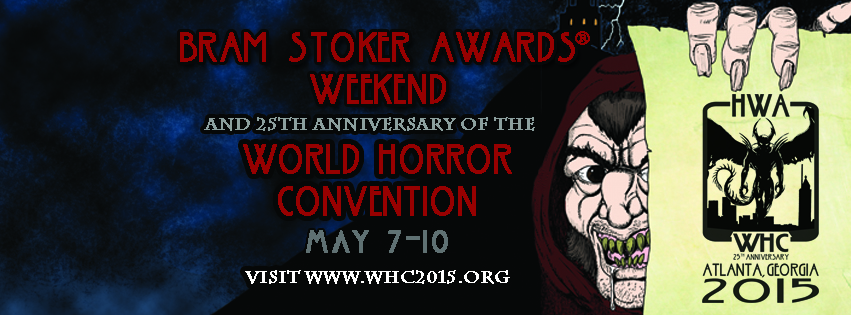
The 2021 StokerCon Horror Writing Convention

Merry meet all,

I’m writing this post to share my experience at StokerCon with my dear readers. It was the most inspiring, badass, and educational event of my life. It was so cool to sit there ( and I had to, as it was virtual and I seriously hurt my back) with other like minded people. The organizers, panelists and attendees were so nice! 

The event began on May 20th to May 23rd. The Horror Writers Association used Hopin for a virtual platform. Over four hundred and sixty people attended the convention. Hopin was a very interactive platform. There was a live chat which I just loved. Breakout sessions, live discussions, and the Ann Radcliffe conferences which was several live videos and discussions of themes related to horror were also offered. I watched almost every single Breakout session. There were so many to choose from.   Someone could pitch to an agent/ editor and participate in the Bram Stoker hangout bars or the Mary Shelley hangout bar, the Shirley Jackson hangout bar or the Edgar Allan Poe hangout bar. 

The Breakout sessions are discussions shared by panelists online. I was able to watch them in the discussion. Live chats made it easier to partake in the session. I watched the following sessions: The Current State of Publishing, A Genre by any other Name, Professional Etiquette: The Business Side of Publishing, The Appeal of a Good Scare, Tone and Setting, Thrilling Communities with Chilling Experiences, How Dialogue can Make or Break a story, the Guest of Honour Reading: Joe Lansdale, Totally Bloodless Horror Promotion, The Scary Truth about Horror reviews, Nightfire Fall Spotlight, How to Make a Career of Writing, Interview with Joe Lansdale, the Interview with Steve Tem, Mentorship in the HWA, What makes a book cover Good, History of the Gothic Horror Folklore, the Bram Stoker Awards Ceremony and the Sixth Annual Final Frame Short Horror Film Competition. But I loved the most the Breakout sessions!! I also viewed the American Female: Gothic, Classic Horror’s Timeless Appeal, the Panel on The Author-Editor relationship in The Horror Genre Author Newsletter as well as a few author readings. 

I also watched the Bathing Beauty: Violence and Vulnerability in the Showers of Horror, Blood Milk and Teeth, It’s Still Alive, Alive!, Real Vampires: The Reflection of Otherness in the lBloody Mirror, “That so wicked mouth”: Rabies, Nymphomania, and the Monstrous New Woman in Bram Stoker’s Dracula, Why is this Possession Different Than All Other Possessions: Jewish Exorcism Films. Those videos were fascinating. So many people let themselves believe that a dybbuk box is actually possessed by a demon or even that Annabelle doll. I don’t believe they are. The Possession video proved it. 

A few more highlights of the convention were the Film Competition and the Bram Stoker Awards. On Saturday night I watched the Final Frame 6th Annual Short Horror Film Competition. The videos were all scary and amazing! The sound and audio quality were amazing!! I voted for the best film I watched. 

The Horror Writers Association is proud to announce the winners of our Final Frame Film Festival that took place during our first virtual StokerCon.

The Final Frame Film Festival is chaired by Jonathan Lees, Final Frame Director and our Director of Film Programming, StokerCon.

This year our judges were ALEJANDRO BRUGUES, GRADY HENDRIX, BECK KITSIS, CARLEN MAY-MANN, LISA MORTON, and ED POLGARDY. 

The GRAND PRIZE goes to Tony Morales for Abracitos

1st Runner-Up to Brian Sacca for Joanne Is Dead

2nd Runner-Up is to Trish Harnetiaux for You Wouldn’t Understand

Best Writing in a Short Film is a tie!

Brian Sacca for Joanne Is Dead

and Trish Harnetiaux & Jacob A. Ware for You Wouldn’t Understand

Audience Award goes to Tony Morales for Abracitos

You can read more about Final Frame here:

http://stokercon2021.com/?p=141

Abracitos used almost no music. That made the fear of the actors in the movie far more real. In fact, the lack of sound was extremely effective at making the fear unbearable and real to viewers because all you could hear was their breathing. Wow. Amazing film. 

Here are the winners of the Bram Stoker Awards: 

Announcing the 2020 Bram Stoker Awards® Winners

Los Angeles, May 22, 2021

The Horror Writers Association (HWA), the premier organization of writers and publishers of horror and dark fantasy, announces this year’s Bram Stoker Awards® winners at a virtual ceremony during StokerCon™ 2021. “This year’s winners reflect a deep range of works from a competitive field,” said John Palisano, HWA President. “The winners and finalists truly represent a broad spectrum of titles in horror and dark fantasy. HWA members and awards juries have shown dedication and objectivity to the selection process for outstanding works of literature, cinema, non-fiction, and poetry.”

We proudly provide the list of talented winners along with the finalist nominees. 

Superior Achievement in a Novel

Winner: Stephen Graham Jones – The Only Good Indians (Gallery/Saga Press)

Also nominated:

Alma Katsu – The Deep (G.P. Putnum’s Sons)

Todd Keisling – Devil’s Creek (Silver Shamrock Publishing)

Josh Malerman – Malorie (Del Ray)

Silvia Moreno-Garcia – Mexican Gothic (Del Rey)

Superior Achievement in a First Novel

Winner: EV Knight – The Fourth Whore (Raw Dog Screaming Press)

Also nominated:

Polly Hall – The Taxidermist’s Lover (CamCat Publishing, LLC)

Rachel Harrison – The Return (Berkley)

Ross Jeffery – Tome (The Writing Collective)

Kate Reed Petty – True Story (Viking)

Superior Achievement in a Young Adult Novel

Winner: Adam Cesare – Clown in a Cornfield (HarperTeen)

Also nominated:

Daniel Kraus – Bent Heavens (Henry Holt and Company/Macmillan)

Monique Snyman – The Bone Carver (Vesuvian Books)

Aiden Thomas – Cemetery Boys (Swoon Reads/Macmillan)

Erica Waters – Ghost Wood Song (HarperTeen)

Superior Achievement in a Graphic Novel

Winner: Nancy Holder, Chiara Di Francia, and Amelia Woo – Mary Shelley Presents Tales of the Supernatural (Kymera Press)

Also nominated:

Steven Archer – The Masque of the Red Death (Raw Dog Screaming Press)

Jennifer Brody and Jules Rivera – Spectre Deep 6 (Turner)

Rich Douek and Alex Cormack – Road of Bones (IDW Publishing)

Alessandro Manzetti and Stephano Cardoselli – Her Life Matters: (Or Brooklyn Frankenstein)Independent Legions Publishing)

Steve Niles, Salvatore Simeone, and Syzmon Kudranski – Lonesome Days, Savage Nights(TKO Studios)

Superior Achievement in Long Fiction

Winner: Stephen Graham Jones – “Night of the Mannequins” (Tor.com)

Also nominated:

Gabino Iglasias – “Beyond the Reef”(Lullabies for Suffering: Tales of Addiction Horror)(Wicked Run Press)

Gwendolyn Kiste – “The Invention of Ghosts” (Nightscape Press)

Jess Landry – “I Will Find You, Even in the Dark” (Dim Shores Presents Vol. I)(Dim Shores)

Sarah Pinsker – “Two Truths and a Lie” (Tor.com)

Superior Achievement in Short Fiction

Winner: Josh Malerman – “One Last Transformation”(Miscreations: Gods, Monstrosities & Other Horrors)(Written Backwards)

Also nominated:

Meghan Arcuri – “Am I Missing the Sunshine?” (Borderlands 7) (Borderlands Press)

Kurt Fawver – “Introduction to the Horror Story: Day 1” (Nightmare Magazine Nov. 2020, Issue 98)

Cindy O’Quinn – “The Thing I Found Along a Dirt Patch Road” (Shotgun Honey Presents, Vol. 4: Recoil) (Down and Out Books)

Kyla Lee Ward – “Should Fire Remember the Fuel?”(Oz is Burning) (B Cubed Press)


Superior Achievement in a Fiction Collection

Winner: Lee Murray – Grotesque: Monster Stories (Things in the Well)

Also nominated:

Kathe Koja – Velocities: Stories (Meerkat Press)

John Langan – Children of the Fang and Other Genealogies (Word Horde)

Patricia Lillie – The Cuckoo Girls (Trepidatio Publishing)

Anna Taborska – Bloody Britain (Shadow Publishing)

Superior Achievement in a Screenplay

Winner: Leigh Whannell – The Invisible Man (Universal Pictures, Blumhouse Productions, Goalpost Pictures, Nervous Tick Productions)

Also nominated:

Scarlett Amaris and Richard Stanley – Color Out of Space (SpectreVision)

Misha Green – Lovecraft Country, Season 1, Episode 1: “Sundown” (Affeme, Monkeypaw Productions, Bad Robot Productions, Warner Bros. Television Studios)

Misha Green and Ihuoma Ofordire – Lovecraft Country, Season 1, Episode 8: “Jig-a-Bobo” (Affeme, Monkeypaw Productions, Bad Robot Productions, Warner Bros. Television Studios)

Angela LaManna – The Haunting of Bly Manor, Season 1, Episode 5: “The Altar of the Dead” (Intrepid Pictures, Amblin Television, Paramount Television Studios)

Superior Achievement in an Anthology

Winner: Lee Murray and Geneve Flynn – Black Cranes: Tales of Unquiet Women(Omnium Gatherum Media)

Also nominated:

Michael Bailey and Doug Murano – Miscreations: Gods, Monstrosities & Other Horrors(Written Backwards)

Samantha Kolesnik – Worst Laid Plans: An Anthology of Vacation Horror (Grindhouse Press)

Sara Tantlinger – Not All Monsters: A Strangehouse Anthology by Women of Horror (Rooster Republic Press)

Mercedes M. Yardley – Arterial Bloom (Crystal Lake Publishing)

Superior Achievement in Non-Fiction

Winner: Tim Waggoner – Writing in the Dark (Guide Dog Books/Raw Dog Screaming Press)

Also nominated:

Florence Kelly and Meg Hafdahl – The Science of Women in Horror: The Special Effects, Stunts, and True Stories Behind Your Favorite Fright Films (Skyhorse)

Alexandra Heller-Nicholas – 1000 Women in Horror (BearManor Media)

Brian Keene – End of the Road(Cemetery Dance Publications)

Alison Peirse – Women Make Horror: Filmmaking, Feminism, Genre (Rutgers University Press)

Kevin J. Wetmore, Jr. – The Streaming of Hill House: Essays on the Haunting Netflix Adaption(McFarland)

Superior Achievement in Short Non-FictionWinner: Tim Waggoner – “Speaking of Horror” (The Writer)

Also nominated:

Rhonda Jackson Joseph – “The Beloved Haunting of Hill House: An Examination of Monstrous Motherhood” (The Streaming of Hill House: Essays on the Haunting Netflix Adaptation)(McFarland)

Cynthia Pelayo – “I Need to Believe” (Southwest Review Vol. 105.3

Kelly Robinson – “Lost, Found, and Finally Unbound: The Strange History of the 1910 Edison Frankenstein” (Rue Morgue Magazine, June 2020)

Christina Sng – “Final Girl: A Life in Horror” (Interstellar Flight Magazine, October 2020)

Superior Achievement in a Poetry Collection

Winner: Christina Sng – A Collection of Dreamscapes (Raw Dog Screaming Press)

Also nominated:

Alessandro Manzetti – Whitechapel Rhapsody: Dark Poems (Independent Legions Publishing)

Jessica McHugh – A Complex Accident of Life (Apokrupha)

Cynthia Pelayo – Into the Forest and All the Way Through (Burial Day Books)

Sara Tantlinger – Cradleland of Parasites (Rooster Republic Press)

Named in honor of the author of the seminal horror novel Dracula, the Bram Stoker Awards® are presented annually for superior writing in eleven categories including traditional fiction of various lengths, poetry, screenplays and non-fiction. Previous winners include Stephen King, J.K. Rowling, George R. R. Martin, Joyce Carol Oates and Neil Gaiman. 

So, as you can see from the above, StokerCon was a smashing success!!! Four hundred eighty five people attended the virtual convention with a ninety percent turn out!! Two thousand eight hundred people have subscribed to the Horror Writers Association Quick Bites newsletter. The Bram Stoker Awards Ceremony had a grand total of twelve hundred views with over four hundred people who watched!! There were 18,000 views and chats during the whole convention. There were a total of one hundred forty votes for the Film Competition. These shy high statistics reveal a growing enthusiasm for horror in all its ravenous blood thirsty forms. Horror has not died! The beast is alive and well and tugging at its’ Damascus steel chains!

I hope this continues into the future, however horrifying that may be!!

Horror was never meant to be compartmentalized, confined, or stamped, shipped and packeged into one solid predefined shape. I now know that like the fanged vampire, a convulsing werewolf or mummy in shreds it changes form, breaks out of its cage and along iwth the changing times, it changes. It pulses and breathes, drinks blood and yet invites us along as it keeps changing with the times.

Blessings, Spiderwitch

1 Comment

Filed under Paranormal and Witchy Fiction