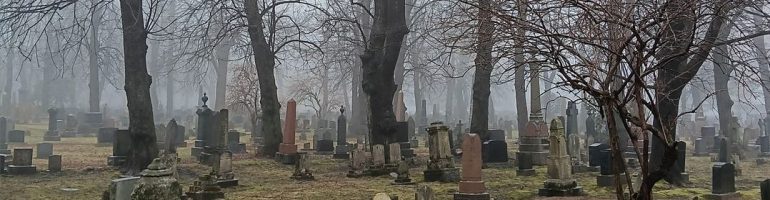
I shall soon be busy preparing for Samhain, especially the Ancestral Supper. One popular theme about the Ancestral supper is that everything has to be black. Ok no problem, I love the colour black. I already have a black spider tablecloth on the kitchen table. I have a black spider web table runner I can use. Black spiderweb placemats and Halloween plates will go. I may stock up on a couple of wine glasses. Now don’t get me wrong, I am not spending a fortune here. Far from it. I visit the dollar stores in October. If you are savvy enough and have an eye for the good quality items, you can find some nice Halloween dishes and decorations.
I enjoy rum with coke, the spicy rum is most preferred. Mulled cider of course, one of my most favourite Samhain traditions of all is cider. I love to add a sprinkle of cinnamon, mugwort, rose petals, oranges, apples and nutmeg to the cauldron pot. A dash of red wine and we are all set. By the 31st, I can finally strain the hawthorn cordial. Oh I can’t wait. I still have some pumpkin bread, I baked two loaves of rosemary bread, and I might make herbed butter too. Roasted pumpkin seeds and roasted hazelnuts oh my gosh, what a treat. Truly.
I plan to light a lot of candles. Candles lend a beautiful ambience to a dinner table. It can be a good idea to decide ahead of time about what music to play and enjoy while eating. Since the theme is an ancestral supper, the music can be that which our ancestors enjoyed. I love listening to Viking music on YouTube. Celtic music is a good choice. I am both Celtic and Scandinavian, and Irish and French Acadian. I grew up listening to good quality fiddle music. I sure have a lot to choose from! I may listen to Loreena Mckennitt and the Viking music on YouTube. This will be a special occasion now!
I plan to wear a black gown with a bodice to lace up. I want to wear my black mourning veil and a circlet. A shawl and a lovely witch hat tops it off.
I want to decorate the back yard too. My garden is my outdoor altar. Tons of fiery leaves cover the garden, mulching and sheltering the garden from the frosty cold. I might do the outdoor bonfire ritual if the weather cooperates. The rain has scared me. I hope it doesn’t rain on October 31. Nope, no rain now. I might hang the creepy snake and spider stew wreath over the door. Glowing pumpkins topped with eerie spiders add a spooky touch. A large cauldron spewing smoke next to a skull is creepy too.
I usually honor my late grandfather and my pets. I am not attending the Samhain ritual on the Commons. This will be a solitary Samhain. I choose to celebrate alone than be forced to deal with the crowd’s toxic bullshit. I am not truly alone. Spirit is with me. My bossy cat too – who probably sees lots of spirits in this apartment but doesn’t react to them. As long as her food bowl and litter box are taken care of by yours truly, she doesn’t care. Solitary is the way to go.
I am all set. My cat Penny shall supervise all activities of course. She’ll get a catnip treat.! (I get the trick lol). I would love to hear what you all have planned for your festivities! Do tell. Leave a comment below.
Graveyard in the woods: Abandoned Nova Scotia logging village so spooky skeptic won’t visit alone
>
The scorched, leafless Inspiration tree is one of the milestones hikers can use to measure their progress when hiking to Roxbury, an abandoned logging village in Annapolis County. – Contributed
STORY CONTINUES BELOW THESE SALTWIRE VIDEOS
Leafless trees close in and choke out the midday sun as David Whitman and his daughter, Lori, tread further into the dense forest.
The two are exploring the remains of Roxbury, an abandoned Annapolis County logging and farming village described as “lost in the woods” by locals.
“At first glance, there is not much to see,” says Whitman.
Whitman, a retired schoolteacher, is now referred to as the ‘Mayor of Roxbury’ after writing his first self-published book about the area called ‘Lost in The Woods: The Lure and History of Roxbury,’ which came out in 2005.
David and his wife Paulette Whitman are both writers that aim to preserve local Nova Scotian history. – Contributed
His interest sparked in the once-thriving settlement destroyed by a forest fire and abandoned in 1904, in the late 1950s and early 1960s. It was here where he spent hours fishing at a nearby river with friends.
“I was always intrigued by Roxbury as a kid. The village is about four miles off the main road, in the middle of nowhere. And when I began teaching school in Halifax, I started to research the area where very little is known.”
Over the years, he went digging for facts, church and school records, deeds, newspaper reports, and interviewed descendants of those that had once called the area “home.”
Whitman discovered a mysterious and tragic past.
The dirt trail that leads to the Roxbury settlement deep in the woods. – Contributed
Originally, he says, Roxbury was known as Durland’s Settlement, named after Thomas Durland, the first English Loyalist settler in the early 1800s. His brother Charles followed with his family, and by 1865, there were 15 families in the settlement, with a population around 60.
But the settlement stretches further back. The Mi’kmaq were the first inhabitants, followed by French Acadians fleeing from British soldiers after refusing to pledge British allegiance – known as the Expulsion from 1755 to 1764.
“About 60 French Acadian exiles took to the river and hid on South Mountain,” Whitman says.
“The Mi’kmaq became their allies, but many Acadians did not survive the freezing winter.”
Remains of stone walls from the Loyalist days. – Contributed
Acadian gold?
Rumours persist, says Whitman, that the Acadians, while fleeing, left stashes of gold under Mile Rock on Roxbury Road.
“There have been some treasure hunters over the years, but nothing retrieved or at least made public.”
While piecing his second book together on the area, Whitman says he interviewed many who reported “strange voices” while alone on Roxbury Road.
“Legend has it some of the French Acadians were planning to come back and get this gold, so I think it plays on the imagination which can run wild out there when no one is around,” he dismisses with a nervous laugh.
When the Loyalists arrived (1775 to 1783), they built permanent structures over the Acadian nomadic-style homes using rocks from the mountain.
Shreds of lumber remain from the former logging and farming village. – Contributed
“By 1904, most of the residents had moved out with the lumber industry depleted and the serious forest fire.”
Whitman explains to produce blueberries, they burned the land, but a fire got out of control and spread over hundreds of acres, torching Roxbury.
Today, the scorched, leafless Inspiration tree echoes this history.
“The tree is aptly named Inspiration because if you make it that far, you might as well keep going,” says Whitman.
There is an 18.7-kilometre in-and-back trail described as “difficult” on All Trails, which features a lake and cuts through the settlement.
Roxbury lay dormant for several years, attended only by nature. Then, in the 1920s, families set up homesteads, including Whitman’s father.
“Roxbury had a school, church, post office, sawmill and grist mill. The last family moved out in 1927,” notes Whitman.
Andrew Rosengren and the Thygesen family were the last homesteaders.
“Then in 1948 through to the late 1950s, lumbering activities by J. H. Hicks and Sons and Max Napthal interrupted the settlement’s slumber. And in the 2000s, forestry work from Bowater Mersey and Lafarge Canada Inc.”
Lost in The Woods: The Lure and History of Roxbury, by David Whitman, published in 2005. – Contributed
Haunted woods
So, what’s left there now? Stone foundations, deep round wells, shreds of lumber.
“But people go there a lot to hike,” says Whitman.
Yet Whitman says he will “never walk there alone.”
The supernatural skeptic that claims, “there is a scientific explanation for everything” admits he has heard “through the trees,” a sound the resembles the “wailing of a man.”
Other interviewees of Whitman reported “strange noises” or “figures.”
It is not a place for the faint of heart, he says.
Roxbury: A return to a ghost town, by David Whitman, published in 2015, with a foreword by John DeMont. – Contributed
“I have not been back there for a while. Not by myself, especially to the graveyards. There was always something about them. There is one graveyard where a man lost his wife in childbirth, and he would visit and cry on their graves.”
In one cemetery, a headstone peeks through the vegetation with just one bold word, “Baby.”
“In my second book, ‘Roxbury: A return to a ghost town,’ I interviewed people that say they could feel or even see someone watching them. It gave them an intense feeling that they should not be there,” he adds.
The book, published in 2015 with a foreword by John DeMont, includes photographs by witnesses, capturing “blurred images of a young girl in a white dress” floating through the cemetery and disappearing into the trees.
“This place can stir the imagination, especially in the graveyards that are in the middle of the woods,” Whitman says.
“People that do not know the history or have not read the books go back there and treat it just as a hike or a tour, but those that know the area are reluctant to go by themselves.”
Dormant wooden cottages in the area – designated by the province as a Provincial Park Reserve – have left a ghostly imprint on many people, including former students of Whitman, who he says will “never talk about what they heard or saw” because it was so frightening.
Whitman is part of Friends of Roxbury that gathered funding for interpretative signage to preserve the lumber settlement’s history. As a result, he no longer needs to give tours in a place he describes as “isolated and creepy.”
“Gothic horror and cosmic dread from the ghostly shores of Halifax.”
Heddy Johannesen
Conjuror of Gothic Horror
Welcome to My Monsters.
I've always been drawn to the shadows, where the monsters live and their stories hunger to be told.
I write about ghosts, monsters, witches, and outsiders, exploring the darker places where fear, mystery, grief, and the supernatural collide.
Welcome to The Paranormal Quill
Gothic Horror. Dark Folklore. Cosmic Indifference.
Step across the threshold.
I am Heddy Johannesen—conjurer of gothic horrors, paranormal nonfiction writer, and dedicated student of herbalism. From the ghostly shores of Halifax, Nova Scotia, I pull back the veil on creepy alternate dimensions and secrets that refuse to stay buried
Pull up a chair, light a candle, and explore the shadows with me. Just mind the spiderwebs.