
Greetings Darklings:
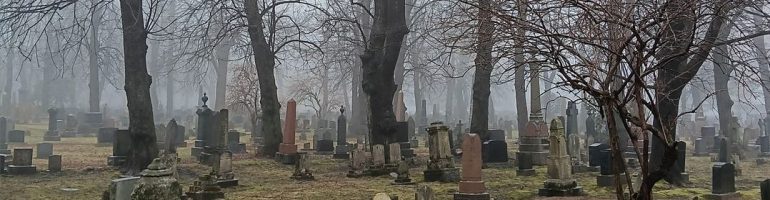
Tomorrow is October 1st!!! I’m excited too. The sky is gray and overcast. I am about to head out and wander around a cemetery. I like cemeteries and graveyards – they are the perfect thing to put me in the October spirit.
I’m proud to announce that Wicked Shadow Press has published my fourteenth flash fiction story, Ashes to Dust, in the Flash of the Dead anthology. There a lot of talented authors included in the book. I can’t wait to read it.

The cover art for the Wicked Shadow Press anthology Flash of the Dead that my story and many others appear in
Today’s post is about my method for plotting my next horror novel, Blood and Incantations. I used a system from the book The Marshall Plan for Novel Writing- a 16-step program guaranteed to take you from idea to completed manuscript. Evan Marshall is a genius, in my opinion. Now as I always tell my readers, the first draft gives you the freedom to be as messy and creative as you can. This holds true with the first draft of your plot outline.
I designed the section sheet page. I wrote it by hand -which I encourage you to do, and I just copied about 80-90 section sheets. I even added a gothic bone border art to the section sheets. The section sheets were too plain. I did not expect to fill all the section sheets.
I wrote the character who is in the section of the story on the section sheets – the viewpoint character. There are three viewpoint characters in my novel: Renesmee, Mark and Donovan. I wrote down where they are in the story, when, who the character is in conflict with, the emotional phase and the rational phase. The plan involves an action and a reaction section all throughout the novel. The character runs into conflict (again and again, as it has to be), and then a rational section, where the character has reacted and now devises an action to take to take control of the conflict. Depending on who the character is, the conflict must get worse and worse throughout the novel, usually for the main character- hero, heroine, or the protagonist.

My gothic section sheet
I know that my outline needs to be tweaked and that some VP characters need more scene sections, and that another character gets more scenes, and that the outline needs more polish, but I did it! I did the thing I did not think I could do. I surprised myself and I had some amazing ideas about how to tell this dark gothic story. I also signed up for Novel November. I still have much to plan and ponder, for example, I have to design the haunted manor, write up a character sketch for the ancestor who accidentally summons the demon, create the demon character, and map out the grounds of the manor. Once I do that, I can dive deep into the novel.
Renesmee is the main heroine of the novel Blood and Incantations. I so do look forward to writing Blood and Incantations. If I do successfully write about 50,000 words or more in Novel November, this will be the fastest I have written a novel. I write the story from the section sheets. I think they could be stronger, but once I write the novel, I can then finally edit and revise and polish.
I highly encourage you all to attempt plotting a novel first. I loved it. I loved the process. Do not use AI. Use the deep abyss of your imagination. Reach deep inside yourself. Let it out. It wants to be. We are all born creative. Let it out to play. You can be surprised at what you create. I surprised myself! I scratched out lots of words, added new words, and let the pen flow over the pages. I found out what it is really like to plot a novel. I doubted myself too, but I tried my hardest to weave a cohesive thread throughout the novel I was plotting. That is what I am talking about. The whole process of feeling like I had no idea what I was doing and then discovering maybe I do! It was not easy and yet I loved the whole process. I want to save my notes too.
Evan Marshall guides you through the process. I think his book is at the strongest when he shows you how to plot a novel. There are many methods and ways to do it. I guess it is all about finding what works for you. Maybe people feel more comfortable doing that on computer. I could not have written the section sheets on a computer, it has to be done on paper. I store all the sheets in a binder divided into sections. That makes it much easier on me. I can easily find the section sheets when I want to work on them.
There is another thing to consider when working on this type of project: Characters. As I filled in section sheet after section sheet, I had to think real hard about what my characters would actually do in this type of story. You have to think about your character first, be in their skin, in their mind, know their habits, mannerisms, and how they react to certain things. How do they handle stress, violence or what would they do if they encountered a monster? Getting fired from their job? Their car is stolen? Someone cuts ahead of them in line at the grocery store? Do they have kids? A college degree? Knowing your characters inside and out helps here. I know there is tons of debate amongst writers on which comes first: plot or character, but for me, they are one. No character, no story. The PLOT is what the CHARACTERS do in the book: how they solve a problem that can sustain a whole novel. The characters have to be interesting enough too. A horror novel takes it to a new level: there is much more possibility of characters encountering a much different level of stress because the story could be plotted with something extraordinary as vampires, werewolves, werebats, zombies. radioactive lizards, demons, Pinhead, Dracula, vampire rabbits, you get the picture. So think about your character! Make them feel real and sympathetic and trust me, your readers will stay with your story. Your villain, antagonist can be human too. Hannibal is a famous example of a human antagonist. He truly comes to life on the page and on the silver screen.
The best way to write an exceptional horror tale is to ask yourself what frightens you! For me, I hate animal cruelty, abuse (been a victim of it), violence, people screaming and shouting, confrontation, loud trucks roaring past me on the street, environmental destruction, racism, corruption, people being pepper sprayed at protests, cruelty, I could go on and on. Those issues get under my skin. A monster should not be one-dimensional, it could embody one or more qualities of the things you hate most in this world and wish would be solved. A monster could be a misunderstood ally, or the villain, but could represent deep fears, what a person is the most paranoid about or remind the hero of a painful memory buried deep down that the hero has tried extremely hard to forget. Then the monster unearths that painful memory and that could make the hero have to act. Now you have a story!
I have never seen a real vampire, zombie or werewolf. I have seen people be the monsters, behave in frightening ways, and give me nightmares or trauma for weeks or even years. A great example of a monster embodying grief or trauma is the Babadook. They screamed at me, made fun of me, forced me to endure humiliation, forced me out on the streets, physically abused me. I have seen real cruelty in humans – who are, not all people, but some, and are capable of the worst cruelty. A teacher told my mother I would never be able to read. Teachers and students tortured me and made fun of me in the classrooms, making me cry. Family members have actually physically abused me.
Now I have written over one thousand blog posts, completed a Bachelor of Arts degree, read more books than most people combined, own the most books of all my family members. My writing has eighty appearances in publications. I have worked my tail off. But it had roots in pain, humiliation from my early days. So don’t ever be afraid to wound your main character. Don’t be afraid to put them in a hard situation in your story. That is what makes your story better! Trust me. Readers want to see the hero suffer and strive to solve an impossible situation, they want to root for the character. Do that, and you will have readers. We writers are not there to give our characters a nice day. Be mean, merciless and force the character to ACT.
So plotting a novel, designing a great memorable character and an equally powerful antagonist, creating the setting: it is all possible with the help of The Marshall Plan. I just love the book. I know it is out of date and I do not care. Great book. It has the best system for novel plotting. It sure appeals to me. I’ve written novels without doing the plot first and had to guess at what would happen next. I think the characters really ‘took the wheel’ here this time. That’s okay, that’s part of the magical creative process. But a novel does need a sound foundation first. And a cat to supervise you as you write and sweat and ponder ….
I hope this encourages you to pen your own novel. I bought the book on Amazon in a hardcover format. The book was published in 1998. But I love the book. It could be good for writers who are just starting out and getting their feet wet writing a novel. This is the fourth novel I have written – well, technically, not written yet but will be soon. You improve with practice. So practice. The only way ahead is forward. It can be amazing to discover what you are capable of creating!
The second edition of Cult of the Spider People will be released on October 20th!!! I have completed the edits for The Mourning Tide and I can’t wait to see the cover art. Both books will be out this October.
Blessings, Spiderwitch )O(