
Greetings darklings:
Darkness has always been a central staple in horror fiction and movies. Authors have used darkness in a variety of themes and visual ways.
It is harder to portray darkness in a character, internal darkness in fiction rather than movies. There is internal darkness and then there is external darkness. The internal darkness resides within the character. That character is not necessarily the villain, but the character does dark things as a result of their own internal darkness. A classic example is Frankenstein. He creates a monster out of hubris, is horrified by his creation then abandons him. His creature is forced to fend for himself and ends up rejected by society as well. Jack Nicholson’s character in The Shining is another classic example of internal darkness. He hurt his son’s arm in the past, but as they live in the hotel and time passes, his character becomes more and more psychologically unraveled and then tries to kill his own family. The ghosts in the hotel have manipulated him into giving into the darkness. I love this story because it is a classic example of psychological horror. The real scare is what he becomes. Internal darkness – the darkness within a character may be scarier than a dark hall, a serial killer waiting for you in the closet, or anything else you can imagine.
If the internal darkness represents a real threat and is not contained, then the horror ensues.
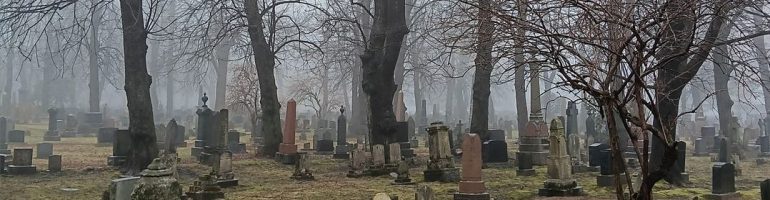
Now let’s look at external darkness as a horror theme. Sharks, a shadowy hall, spiders, bats, a haunted abandoned asylum, an eerie moonlit cemetery. These are all examples of external darkness. You enter a house believed to be haunted, dared by your peers and enter it to save your reputation. First, you see the cobwebs along the old ceiling and the hallway walls. Okay, no big deal. Your footsteps shuffle on the floor. Your heart pounds and you break out in a sweat. Darkness surrounds you. The sound of your heart pounding and your own breathing fills your ears. A mouse squeaks or a door slowly closes on its own and your adrenaline spikes. Shadows dance in the darkness. You tell yourself that is impossible. The rocking chair creaks on its own. You want to run, but your peers taunted you and you know you have to tough it out or risk losing the respect of your friends waiting outside- or did they abandon you? Then you see something shift or enter/ exit from a room. But you know no one lives there and it was abandoned years ago. The shadow or ghost (whatever you believe it to be) starts moving toward you? Does it limp? Shuffle? Slither? Crawl? Okay that’s it. You believe you paid your dues and say screw it- you don’t care how long they tease you, you’re outta there. You open the door – maybe the doorknob is old and a little sticky, so you struggle with it and as the thing catches up to you, you feel its breath on your neck, but you manage to wrench the door open with seconds to lose and scuttle down the front porch steps. You dare yourself to glance behind you. You made it. You are not waiting in there for more horror.
It is the duty of a good horror author to know what darkness is. That darkness can be internal, happening within the character or external, like the haunted house. A good author knows the difference and knows how to use both elements well to scare his readers. When done effectively, the result is a memorable horror story. I believe that the best horror authors might understand darkness well, because they have it in within themselves or they have seen that darkness in people around them. They survived trauma, abuse, neglect, had parents with addiction issues or are abusive. They saw something that strongly affected them and can’t quite forget it, such as something not quite right in a cemetery or a fight betwen their parents or a unreasonably angry teacher as a child at school. They might make the best horror authors because they put what they truly see or feel onto the page. The reader connects with the characters on a deeper level because it resonates within the reader. They identify with the characters and begin to worry for the characters and that keeps them reading. They stay up till 3 am and curse the author.
When I wrote The Cult of the Spider People, the story was a culmination of several things that had to do with my ex and old witch coven I was in. The book was the result of my ex’s selfishness, his narcissistic personality and how irresponsible he was. The fact that so many people turned on me that I believed were my friends. The book is a result of my heartbreak and I believe that writing it was cathartic. My ex-boyfriend was never interested in redemption, quite the opposite. It is a dark, powerful story.
So dare yourself to explore your own darkness or what you see around you whether that be in people or in the world. Pour it onto the page. One warning: You do not have to traumatize yourself. It is a good idea to maintain a balance.
Blessings Spiderwitch )O(